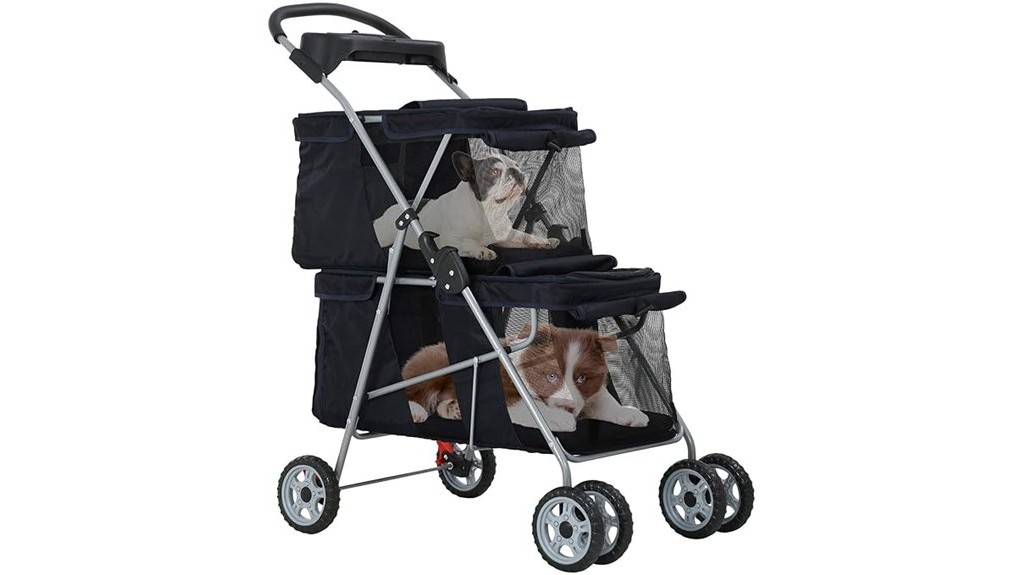

You’ll want a stroller that matches your dog’s weight and cabin size, with wheels and a frame suited to your usual terrain. Compare rigid steel or aluminum frames, 6.3" treaded wheels for gravel versus smaller smooth wheels for pavement, and reliable rear brakes plus secure harness anchors. Prioritize breathable mesh, washable inserts, and clear size charts for multi-pet layouts. Consider foldability and storage capacity for travel. Keep going to see top picks and specific matchups for your needs.
Some Key Takeaways
- Match stroller weight capacity and cabin dimensions to your small/medium dogs so both fit comfortably without overloading the frame.
- Prioritize wheel size and tread (6.3" for trails, smaller smooth wheels for pavement) based on your usual terrain.
- Choose a rigid frame (aluminum or steel) with reliable rear brakes and good weight distribution for multi-dog stability.
- Ensure breathable, tightly woven mesh, washable padded inserts, and a waterproof 600D Oxford body for comfort and easy cleaning.
- Look for compact, tool-free folding and adjustable handles if you need trunk-friendly travel and ergonomic control.
How to Pick a Dog Stroller for Small and Medium Dogs (Weight, Size, Terrain)
When choosing a stroller for small or medium dogs, match weight capacity, cabin size, and wheel type to your pets and usual terrain. You’ll compare models by checking weight distribution and a clear size chart so both pets sit comfortably without overloading one side. Prioritize terrain compatibility: larger 6.3" wheels and double front wheels handle gravel or dirt, while lighter wheels suit pavement. Assess handle height for your posture and control; adjustable handles keep the group aligned. Look for rigid frames, breathable mesh, and washable inserts to balance durability, comfort, and a shared sense of belonging on every walk. Consider options designed specifically for family pet owners to ensure features that support multiple pets and frequent travel.
Top 6 Strollers for Small/Medium Dogs : Best Overall, Budget, and Compact Picks
Ready to narrow down the choices, we've picked six strollers that balance strength, comfort, and value so you can match features to your dogs' needs and terrain. You’ll find a Best Overall with a rigid steel frame, 600D Oxford fabric, and versatile canopy styles that protect in sun or light rain. The Budget pick gives reliable wheels, basic canopy, and washable insert without extra frills. Compact options focus on a speedy folding mechanism, light weight, and trunk-friendly dimensions. Each model compares capacity, wheel size, ventilation, and storage so you feel confident choosing the right fit for your pack. We also consider how each stroller pairs with collapsible pet crates commonly used by family pet owners to simplify travel and storage.
Which Stroller Features Matter Most: Frame, Wheels, Brakes, and Ventilation?
Because your pup’s comfort and safety depend on the stroller’s bones and moving parts, you should focus first on four core features: the frame, wheels, brakes, and ventilation. Choose a lightweight frame like aluminum for strength without bulk; compare rigid steel for max durability if you carry heavier pups. For wheels, prioritize size and tread for smooth rolling and noise reduction on pavement or gravel; double front wheels add stability. Brakes should be reliable rear brakes with an easy-to-use quick release for folding and emergency stops. Ventilation depends on mesh durability—look for tightly woven panels that balance airflow, visibility, and longevity. Consider adding comfortable steps for pets with car access to make outings and travel easier.
Match a Stroller to Your Needs: City Walks, Hiking, Travel, and Multi-Pet Use
Although you might prioritize different features depending on your routine, matching a stroller to specific uses—city walks, hiking, travel, or multi-pet outings—means comparing trade-offs in weight, wheel size/tread, suspension, and folding convenience so you get the best fit for your needs. For urban commuting choose lighter frames, compact fold, and smooth wheels for curbs and transit. For hiking prioritize larger 6.3" treaded wheels and suspension to handle dirt and gravel. For travel look for quick, tool-free setup and compact trunk storage. For multi-pet use confirm 30 lb capacity per compartment, sturdy frame, mesh visibility, and durable 600D fabric for beach outings. Consider also whether a stroller can convert to a pet playpen for versatile home and outdoor use.
Maintenance, Folding, and Safety Tips to Keep Your Pet Comfortable and Secure
Regularly inspecting and maintaining your stroller keeps pets safe and extends the product's life, so check the frame, fabric, wheels, and moving parts before and after outings. You should follow a cleaning schedule—wipe waterproof 600D Oxford, machine-wash the removable padded insert, and clear debris from 6.3" wheels. Compare folding mechanisms: the double-layer fold here is fast and tool-free, compact for trunks, versus bulkier designs. Perform routine safety checks on brakes, mesh windows, and harness anchors. Store folded in a dry place, lubricate joints lightly, and involve family so everyone knows setup and emergency procedures. Keep an emergency kit with your stroller that includes identification, water, and pet evacuation supplies.
Some Questions Answered
Can Two Dogs With Different Weights Share One Stroller Safely?
Yes — you can safely share one stroller if you manage weight distribution and use separate compartments. You’ll compare both dogs’ sizes and place the heavier in the sturdier side or center to avoid tipping. The stroller’s rigid steel frame and 600D fabric handle loads well, but don’t exceed the combined capacity (about 30+ lbs per seat). You’ll want balanced positioning, secured harnesses, and regular checks for stability.
Are Stroller Fabrics Safe for Dogs With Allergies?
Yes — you can usually find stroller fabrics that suit allergic dogs. You’ll want hypoallergenic materials and breathable mesh to reduce irritants and improve airflow. Compare polyester blends or 600D Oxford (durable, water-resistant) with medical-grade options if sensitivity is high. You’ll also want removable, washable inserts and frequent cleaning routines. You’ll feel supported knowing the mesh ventilation and easy-wash fabrics help keep your pets comfortable and included.
Can I Fly With This Stroller as Carry-On or Gate-Check?
Usually you can gate-check this stroller but rarely bring it as carry-on—airline policies vary and hinge on stroller dimensions and cabin space. Compare your carrier’s max stroller dimensions to this model folded size; if it fits, you’ll carry it aboard. If not, you’ll gate-check it at no extra cost on most airlines. You’ll want to confirm with your specific airline ahead of time to avoid surprises and feel confident traveling together.
How Do I Transport a Stroller on Public Transit or Buses?
Fold it quickly using the folding technique, then keep it compact so you can board without blocking aisles. During peak hours, you’ll avoid conflicts by choosing off-peak trips or waiting for less crowded cars. Use strap attachments to secure the stroller upright or to a pole, and follow urban etiquette: offer space, ask nearby riders if they need room, and position pets so everyone feels comfortable and included.
Are Replacement Wheels and Parts Readily Available?
Yes — replacement parts are generally available, and you’ll find both OEM and aftermarket compatibility options. You can compare manufacturer-sold wheels and brakes with third-party replacements for price and durability. Steel-frame fittings and standard wheel sizes make swaps straightforward, though double-front wheel assemblies may need model-specific parts. You’ll feel supported buying common items like tires, brakes, and clips from retailers or pet communities that share tested aftermarket compatibility tips.