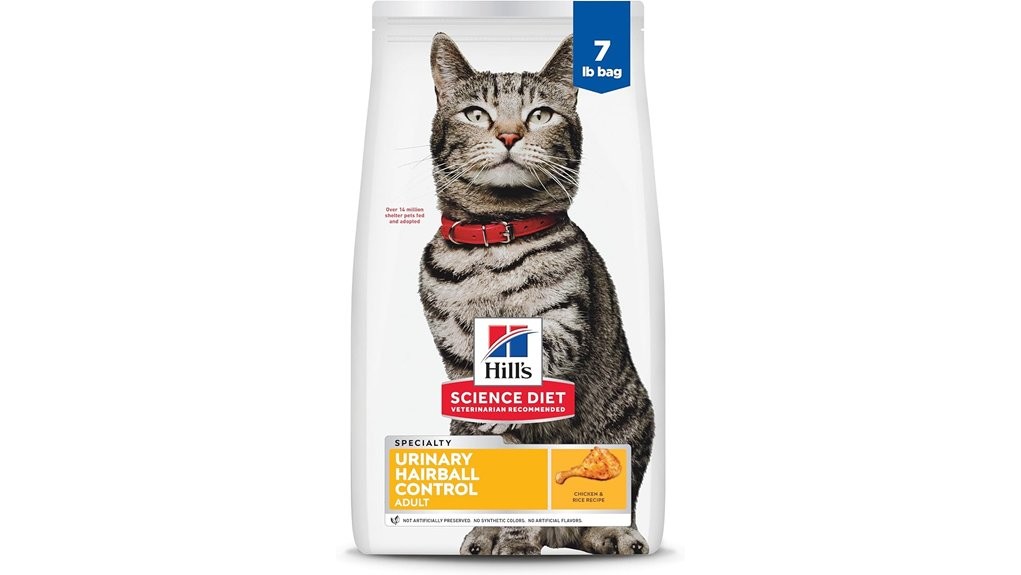

You’ll find Hill’s Science Diet Urinary Hairball Control is a vet‑formulated adult cat diet that targets both lower urinary tract risk and hairball passage. It uses controlled minerals and balanced acidifiers to reduce struvite and calcium oxalate formation, plus soluble fibers and moisture‑supporting ingredients to help hair transit. Protein supports lean mass and omegas improve coat health. Expect changes in 2–8 weeks with veterinary monitoring, and more detailed guidance and practical tips follow below.
Some Key Takeaways
- Formulated to support urinary tract health while reducing hairballs through controlled minerals and soluble fibers for hair transit.
- High real‑chicken protein and balanced omega (EPA/DHA + omega‑6, vitamin E) promote lean mass and healthier skin/coats.
- Typically reduces hairball events and stabilizes lower urinary signs within 2–8 weeks of consistent feeding.
- Best for adult indoor cats (1–6 years) prone to hairballs and lower urinary tract issues; not for kittens or seniors without vet advice.
- Use a 7‑day transition, monitor urinary biomarkers and body condition, and consult your veterinarian if symptoms persist.
What This Formula Claims to Do for Urinary Health and Hairball Control
Although the bag targets two issues at once, Hill's Science Diet Urinary Hairball Control specifically formulates nutrient levels to support urinary system health while reducing hairball formation. You’ll find a controlled mineral profile and balanced acidifiers intended to minimize struvite and calcium oxalate risk, supported by data-driven formulation principles. Natural, soluble fibers promote hair transit, lowering gastric hair aggregation. The formula also emphasizes feline hydration through moisture-promoting ingredients and encourages monitoring of urinary biomarkers to assess response. You’ll feel part of a clinical community when you track outcomes with your vet and share objective results for ongoing management. This product line is designed for family pet owners who want to boost digestion naturally using supportive enzyme and fiber approaches.
Who This Food Is Best For (Age, Urinary Issues, Grooming Needs)
Having outlined how the formula targets urinary parameters and hairball reduction, consider which cats will most likely benefit: adult cats aged 1–6 with a history of lower urinary tract signs (straining, hematuria, frequent urination) or those prone to hairball regurgitation due to heavy shedding or extensive self-grooming. You’ll find this diet suits indoor groomers who need fiber-mediated hairball control plus urinary support. It’s not formulated for senior cats or kittens, so avoid use outside the 1–6 range without veterinary guidance. If your cat shows recurrent LUT signs or chronic hairballs, discuss this option with your vet to confirm appropriateness. This product is sold alongside other pet care items tailored to family pet owners.
Ingredients and Nutrition That Matter: Protein, Fibers, Omegas, and Urinary Support
When you compare labels, focus on protein quality, fiber type and amount, omega fatty acid balance, and the diet’s formulation for urinary health because these components directly affect muscle maintenance, hairball transit, skin and coat condition, and urinary tract risk factors. You’ll value Hill’s high protein from real chicken for lean tissue support. Check Fiber sources: soluble fibers aid hairball passage, insoluble promote stool bulk. Assess Omega balance—EPA/DHA plus omega‑6s and vitamin E—for integumentary integrity. Finally, review Mineral control (notably magnesium, calcium, phosphorus) since controlled levels reduce urinary crystal risk. This clinical lens keeps you confidently aligned with your cat’s needs. Consider adding pet probiotics at home to support digestive and overall health.
Real-World Results: Effectiveness, Vet Recommendations, and Typical Timelines
Because you’re looking for practical outcomes, here’s a concise, evidence‑based summary of how Hill’s Science Diet Urinary Hairball Control typically performs in real use: veterinarians commonly recommend it for adult cats with mild hairball issues and urinary health concerns, and owners usually observe reduced hairball events and stable urinary signs within 2–8 weeks of consistent feeding, provided portioning and hydration are maintained. You’ll see owner testimonials reporting fewer expulsions and improved grooming comfort. Expect behavioral changes like calmer litterbox use. Clinicians advise lab results and long term monitoring to confirm urinary parameters remain normal and to guide ongoing care. Many owners also introduce scent introduction cloths to help new pets settle when switching diets.
Buying Guide and Practical Tips: Feeding, Transition, Packaging, and Return Policy
If you switch your cat to Hill's Science Diet Urinary Hairball Control, follow a 7‑day gradual shift—mix increasing amounts of the new food with decreasing amounts of the old—to reduce gastrointestinal upset and encourage acceptance. You’ll follow feeding transitions outlined on the 7 lb bag; adjust portions by weight and monitor body condition. Serve dry kibble with fresh water; consult your veterinarian if symptoms persist. Packaging lists ingredients, model number 10136, and feeding guidelines for Adult 1–6. The brand offers a 100% satisfaction or your money back return policy; retain receipts and unopened portions for prompt resolution within the seller’s timeframe. Many family pet owners also keep an accessible supply of essential kitten supplies like litter, bowls, and grooming tools when bringing new cats or kittens into the home.
Some Questions Answered
Is This Formula Suitable for Cats With Kidney Disease?
No — you shouldn’t assume renal suitability; this formula isn’t specifically a renal diet. It provides regular protein content from real chicken for maintenance, not the restricted protein or altered phosphorus levels used in prescription kidney diets. If your cat has kidney disease, consult your veterinarian; they'll evaluate protein content and other renal-safety markers and recommend a prescription renal formula if needed so you and your cat feel supported and confident in care.
Can Kittens Under 1 Year Eat This Food Safely?
No — you shouldn't feed this to kittens under 1 year. Kitten digestion and growth nutrients differ; pediatric formulas provide higher calories, different calcium/phosphorus ratios and essential DHA for brain and eye development. Using an adult urinary/hairball diet risks inadequate support during rapid growth. Consult your veterinarian to choose a kitten-specific diet that meets growth nutrients needs; they'll help you shift safely and keep your kitten thriving and included in care decisions.
Does This Kibble Work With Free-Feeding Schedules?
You can free-feed, but you shouldn’t. For portion control and an appropriate feeding schedule, measure daily rations to prevent overeating and weight gain; free access makes monitoring intake and urinary health harder. Follow package guidelines, adjust for body condition, and consult your veterinarian at checkups. You’ll join others prioritizing clinical monitoring and weight management while keeping fresh water available; shift gradually if changing diets to maintain gastrointestinal stability.
Is the Packaging Recyclable or Eco-Friendly?
No — the bag isn’t marketed as sustainable packaging or made from fully recyclable materials. You’ll want to check the printed label or contact Hill’s for recycling codes, but current product info doesn’t claim recyclable materials or compostable components. If eco-friendly packaging matters to you, consider reaching out to Hill’s customer service for alternatives or updates; they can confirm materials and any sustainability initiatives that let you feel included in greener choices.
Are There Known Common Allergens in This Formula?
Yes — this formula contains chicken, so if your cat has chicken sensitivity it can trigger reactions. It also includes grains, so a grain allergy could be relevant for some cats. You’ll want to review the ingredient list and consult your veterinarian for allergy testing or an elimination trial. Together you’ll determine whether this diet fits your cat’s needs and maintain inclusion while monitoring clinical signs and response.