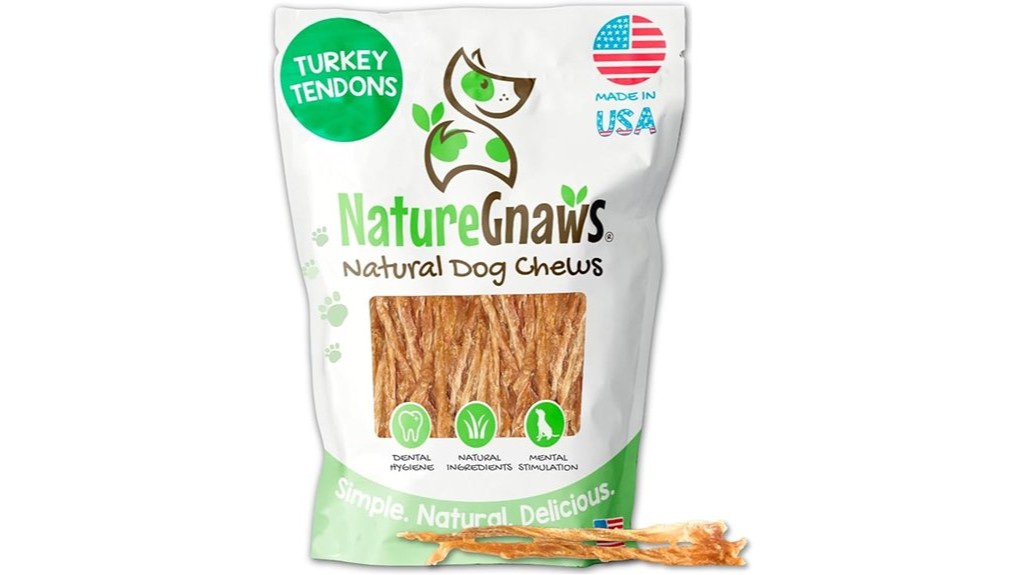

Nature Gnaws USA turkey tendons are single‑ingredient, grain‑free chews made from 100% U.S. turkey that give your dog a durable, protein‑rich option for longer gnawing and dental engagement. They’re dense and fibrous, soften predictably, and can help mechanically reduce plaque, but you should supervise use and avoid them for aggressive power chewers or dogs that gulp. Portion by size, store sealed, and treat them as occasional rewards — keep reading for details on safety, sizing, and feeding tips.
Some Key Takeaways
- Single-ingredient chews made from 100% U.S.-sourced turkey tendons, grain- and gluten-free.
- Dense, fibrous texture provides sustained gnawing and helps mechanically reduce plaque.
- Best for light-to-moderate chewers, teething puppies, small to many medium breeds.
- Not recommended for aggressive power chewers or dogs that gulp treats whole.
- Supervise sessions, limit to 10–20 minutes, and discard small fragments to ensure safety.
What Nature Gnaws USA Turkey Tendons Are and Who They're For
While staying simple and natural, Nature Gnaws USA Turkey Tendons are single-ingredient chews made from 100% U.S.-sourced turkey tendons, designed as a grain- and gluten-free alternative to rawhide. You’ll find a durable, savory option that suits small through large breeds and supports dental engagement. The brand emphasizes sourcing transparency, so you can trust origin claims when choosing treats. Chew variety is modest but focused — long-lasting tendons vs softer options elsewhere. Note puppy suitability: they're appropriate for teething puppies and light chewers with supervision. Adjust feeding frequency by size, activity, and supervision to maintain safety and balance. Freeze-dried treats are popular because they retain nutrients while offering a convenient, shelf-stable option for pet owners who want minimally processed snacks, especially those looking for single-ingredient choices.
Ingredients, Nutritional Profile, and Safety (100% Turkey, Grain‑Free)
Now that you know what the tendons are and who they're for, let's look at what's inside and what that means for nutrition and safety. These chews are 100% turkey tendons — simple ingredient list clarifies protein sourcing and supports grain‑free, gluten‑free diets. Nutrition centers on animal protein and connective tissue; expect high protein, low carbs. Check packaging for calorie breakdown per piece to fit portion control and feeding frequency recommendations. The family‑run brand emphasizes domestic sourcing and conducts allergen testing protocols; still monitor your dog for sensitivities. Use them as occasional rewards, not meal replacements, within a balanced diet. The company also sells a range of wet dog food products designed for family pet owners to complement treats like these.
How Durable and Dental‑Friendly the Tendons Are in Real Use
Typically, you'll find these turkey tendons hold up well for light to moderate chewers: their dense, fibrous texture resists quick shredding and provides sustained gnawing without turning into small, easily swallowed fragments. You’ll notice good chew longevity during normal sessions; tendons soften predictably rather than fragmenting. That steady wear encourages mechanical plaque reduction and fresher breath through consistent surface contact. Texture variation between thicker and thinner sections keeps dogs engaged while distributing teeth abrasion evenly, lowering hotspot wear. Overall, you get a durable, dental-friendly chew that fits communal expectations for safe, natural treats and supports routine oral care. For safer nighttime walks with your dog after chewing sessions, consider using reflective leashes to keep pets safe in low-light conditions.
Which Dogs Should (and Shouldn't) Get These Tendons
Decide based on chewing style and size: these 100% turkey tendons work well for light to moderate chewers—teething puppies, small dogs, and many medium breeds will get a long, dental-friendly chew without rapid fragmentation—whereas aggressive power chewers or dogs that gulp treats whole shouldn't get them because those dogs can break off large pieces or swallow chunks that raise choking or obstruction risk. You should offer tendons to senior dogs with good dentition as a gentler, protein-rich option that still promotes chewing. Avoid them for aggressive chewers, dogs with missing teeth, or pets prone to scarfing; supervise all sessions and tailor portioning to size. They can also be a helpful addition to a pet’s routine for supporting digestive health when used appropriately.
Pros, Cons, and Smart Buying & Feeding Tips
Because turkey tendons are single-ingredient and lightly processed, they give you a durable, protein-rich chew that cleans teeth and keeps dogs occupied without fillers or rawhide. Pros: natural, grain/gluten/rawhide-free; long-lasting for light-to-moderate chewers; supports dental health and engagement. Cons: may splinter with aggressive chewers; smaller dogs might finish quickly; some dogs dislike texture. Smart buying: do a price comparison per ounce, buy from reputable sellers, and choose size by breed. Feeding tips: supervise, limit sessions to 10–20 minutes, discard small fragments. Storage tips: keep in a cool, dry place in a sealed container to preserve freshness. Consider keeping an emergency kit of essential pet wound care supplies on hand in case a chew causes a cut or puncture.
Some Questions Answered
Do They Have an Odor That Bothers Sensitive Humans?
No — they have a mild aroma that typically won’t bother most people, though human sensitivity varies. You’ll notice a natural, meaty scent from 100% turkey tendons, but it’s far less intense than rawhide or some bully sticks. If you or household members are especially scent-sensitive, keep chews in a ventilated area or sealed container; otherwise you’ll likely find the aroma pleasantly subtle and pet-friendly.
Are These Tendons Suitable for Dogs With Turkey Allergies?
No — if your dog has a turkey allergy, you shouldn’t give these tendons. You’ll want hypoallergenic alternatives made from novel proteins (venison, kangaroo, or fish) and consult your vet. Consider formal allergy testing before introducing new proteins, and introduce replacements slowly while monitoring reactions. You’re not alone—many owners navigate this, and your vet can help you choose safe, satisfying chews that support dental health without triggering allergies.
Can Tendons Be Frozen or Refrigerated for Storage?
Yes — you can freeze or refrigerate them. You’ll extend freeze storage and chilled shelf life: refrigerate opened packages up to a week, and freeze portions for several months in airtight containers to preserve texture and flavor. Thaw in the fridge before giving to your dog, and discard if odor, mold, or softness appear. You’re keeping treats safe and sharing reliable, long-lasting chews with your pet community.
How Long Does a Typical Tendon Last During Chewing?
A typical tendon lasts anywhere from 10 minutes to several hours depending on your dog’s size and chewing style. You’ll notice chewing stages: initial intense gnawing, steady shredding, then slower nibbling as it softens. Chew longevity hinges on breed, age, and chew strength; light chewers and puppies get longer sessions, heavy chewers shorten life. You’ll join a community of owners who swap tips to extend enjoyment and dental benefits.
Are These Tendons Recyclable or Compostable Packaging?
No — the standard packaging isn’t recyclable or compostable; it’s sealed plastic. You’ll want to check labels for recyclable packaging or compostable options if those matter to you. If you prefer eco-friendly choices, look for brands that clearly state recyclable packaging or certified compostable options, or contact the seller to request greener packing. Joining community groups and sharing feedback can help brands shift toward recyclable packaging and compostable options.